|
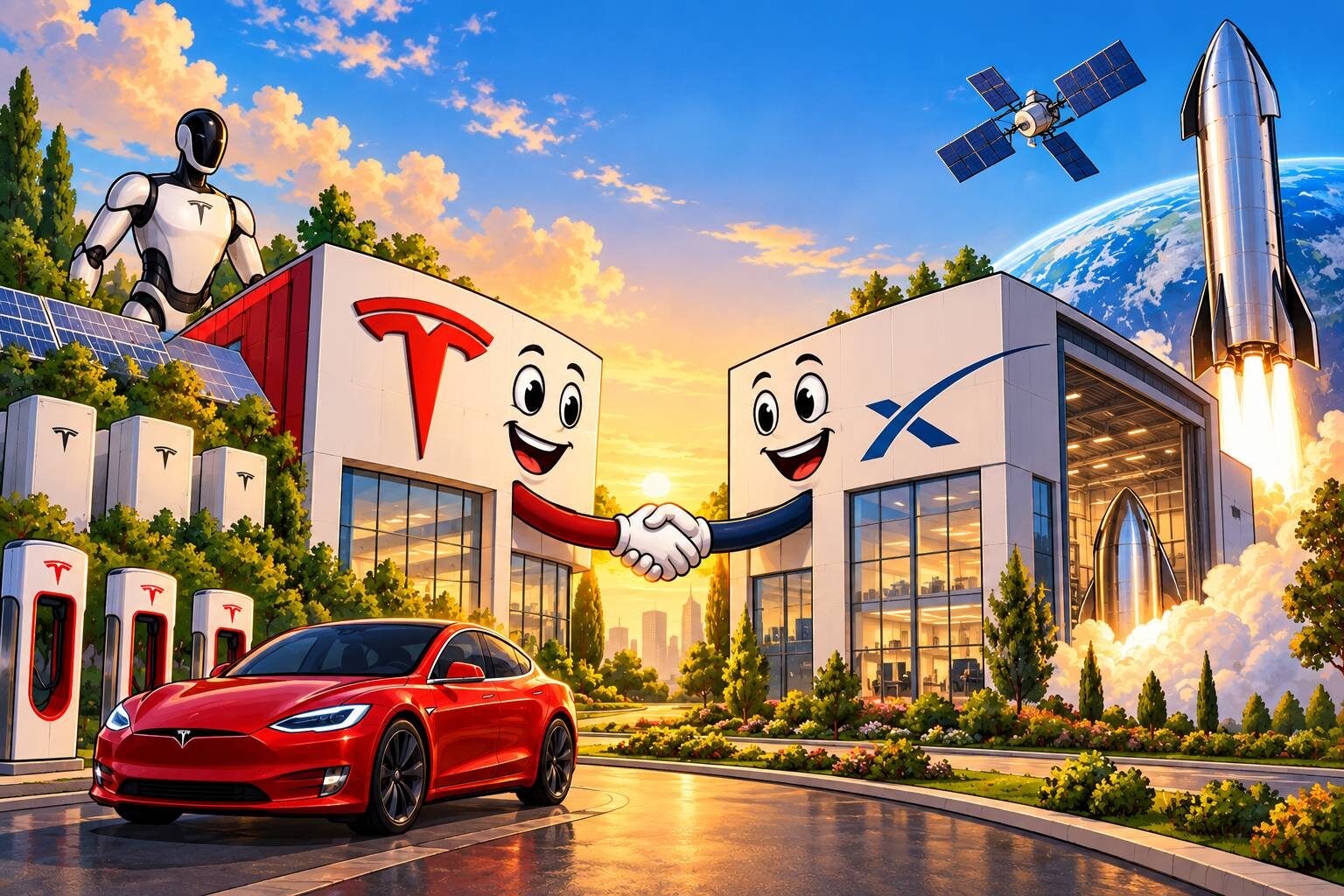
Two of Elon Musk’s biggest companies are considering joining forces in what could become the largest corporate merger in history. But would combining them actually make them more valuable? Elon Musk confirmed this week that SpaceX and Tesla have formed independent committees to explore a potential merger. Together, the companies are worth approximately $3.5 trillion, making this one of the most significant potential deals Wall Street has ever seen.¹ Nothing has been agreed upon yet, but Musk has publicly expressed support for the idea. So why would he want to combine a rocket company with an electric car company, and what would it mean for shareholders? The Case for a MergerAt first glance, Tesla and SpaceX seem like completely different businesses. Tesla manufactures electric vehicles, batteries and energy storage systems, while SpaceX launches rockets, operates Starlink and is expanding into AI infrastructure. But the two companies are increasingly working on similar technologies. The biggest opportunity is artificial intelligence. Tesla needs powerful computers and advanced chips to develop self-driving cars and humanoid robots. SpaceX is investing heavily in AI computing and satellite infrastructure. Combining the companies could allow them to share technology, engineering talent and resources rather than developing everything separately.² There are other potential benefits. Tesla’s battery technology could help power SpaceX’s growing infrastructure, while Starlink could provide connectivity for Tesla vehicles and robots. Both companies could also benefit from sharing manufacturing expertise. Another advantage is access to capital. A combined company could potentially direct money toward whichever business has the greatest opportunity at a given time. That flexibility could be valuable as both companies pursue expensive projects. For Tesla shareholders, the merger would also provide exposure to SpaceX’s rapidly growing satellite and space businesses. For SpaceX shareholders, it would offer ownership in Tesla’s automotive, energy and robotics businesses. The Case Against a MergerThe biggest concern is whether these companies are actually better together. SpaceX already has an attractive growth story through Starlink, rocket launches and AI infrastructure. Tesla, meanwhile, faces intense competition in electric vehicles and is spending heavily to develop autonomous driving and robotics. Why should SpaceX shareholders take on Tesla’s challenges if SpaceX is already doing well on its own? Then there’s the issue of valuation. With SpaceX valued around $2 trillion and Tesla around $1.5 trillion, the price at which the companies combine will be extremely important.³ For example, if SpaceX overpays for Tesla, existing SpaceX shareholders could end up owning less of the combined company than their contribution justifies. The reverse could also happen to Tesla shareholders. There’s also the question of control. Musk owns significant stakes in both companies and has voting control of SpaceX. A merger could give him even greater influence over the combined business. That raises questions about whether the deal would be structured in the best interests of all shareholders.⁴ Finally, the merger could create regulatory complications. SpaceX works closely with the U.S. government and military, while Tesla has substantial manufacturing operations in China. Combining those businesses could raise national security concerns in both countries.⁵ What Happens Next?The independent committees will evaluate whether a merger makes financial sense and what terms would be fair to shareholders. One possibility is that SpaceX acquires Tesla using shares rather than cash. Another is that both businesses become part of a newly created parent company. Neither structure has been agreed upon.⁶ Shareholder approval would also be required, and the process could take time. My TakeI can understand why Musk wants to bring these companies together. There are real opportunities to share technology, reduce duplicated expenses and accelerate innovation. But I’m not convinced they need to merge to accomplish those goals. SpaceX and Tesla can collaborate on AI, robotics, manufacturing and energy without becoming one company. In fact, they’re already doing some of that today. For me, the biggest question is whether the merger would create additional value for shareholders or simply combine two very different businesses under one roof. A merger isn’t automatically a good investment just because the companies involved are successful. The price matters, the structure matters, and shareholders need to understand what they’re gaining and what they’re giving up. Until we know those details, I think it’s too early to call this a win for either company’s investors. Sources
Disclosure: The author owns shares of Tesla and SpaceX. This article is for educational purposes only and should not be considered individualized investment advice. Any potential merger remains uncertain and subject to negotiations, approvals and regulatory review. Investments involve risk, including possible loss of principal. |
Maddahi Wealth · Insights
SpaceX and Tesla Could Merge. Is That a Good Thing for Investors?